

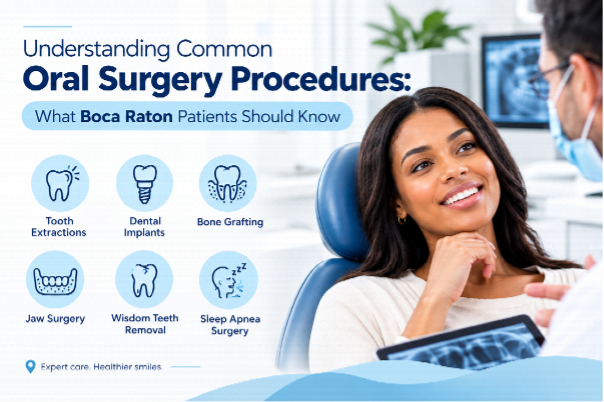
Oral surgery can involve much more than treating a painful tooth. From replacing missing teeth to removing impacted wisdom teeth, oral and maxillofacial surgeons manage a range of conditions affecting the teeth, jaw, and surrounding structures.
For patients, the idea of surgery can naturally raise questions: Is the procedure necessary? What alternatives are available? How long will recovery take? And what should be expected before and after treatment?
Understanding the purpose of different procedures can make those conversations easier and help patients approach treatment with more confidence.
When Dental Implants May Be an Option for Missing Teeth
Losing a tooth can affect more than appearance. Missing teeth can make chewing more difficult and may contribute to changes in the surrounding bone and teeth over time.
Dental implants Boca Raton can provide a foundation for replacement teeth. A dental implant is a small post that is surgically placed into the jawbone and functions as a replacement for the root of a missing tooth. Once the implant has integrated with the surrounding bone, it can support a crown, bridge, or other dental prosthesis.
The treatment process varies from patient to patient. An initial evaluation typically considers oral health, jawbone structure, the number of missing teeth, and the type of restoration planned.
In some cases, additional procedures such as bone grafting may be recommended before or as part of implant treatment. This is why an individualized examination is important rather than assuming every patient will follow the same treatment timeline.
Why Wisdom Teeth Sometimes Need to Be Removed
Wisdom teeth are the final set of molars to develop. While some people have enough room for these teeth to emerge normally, others may develop impacted wisdom teeth or experience problems related to their position.
An impacted tooth may remain partially or completely beneath the gum or become trapped against another tooth. Depending on its position, it can contribute to discomfort, inflammation, infection, or other dental problems.
Wisdom teeth removal Boca Raton may be recommended when an evaluation shows that removal is appropriate. The procedure can range from a relatively straightforward extraction to a more involved surgical extraction, depending on the position of the tooth.
The timing of wisdom tooth treatment can also vary. Some patients are evaluated before symptoms develop, while others seek care after experiencing pain or swelling.
A consultation allows the surgeon to assess the position of the teeth and determine the most appropriate approach.
When Is Tooth Extraction Necessary?
Dentists generally try to preserve natural teeth whenever possible. However, there are situations in which a tooth may be too damaged or compromised to restore successfully.
A tooth may require removal because of:
- Severe decay
- Advanced periodontal disease
- A fracture that cannot be repaired
- An impacted or poorly positioned tooth
- Preparation for orthodontic treatment
- Preparation for dental implant treatment
In these situations,Tooth extraction Boca Raton may be recommended after the tooth and surrounding structures have been evaluated.
Extraction does not necessarily mean that treatment ends with removing the tooth. Depending on the patient’s circumstances, the next step could involve replacing the missing tooth or addressing the underlying condition that led to the extraction.
For example, a tooth removed in preparation for an implant may eventually be replaced with an implant-supported restoration.
Not All Sleep Problems Are Simply About Snoring
Snoring is common, but persistent or loud snoring can sometimes occur alongside obstructive sleep apnea, a condition in which airflow becomes repeatedly restricted during sleep.
Obstructive sleep apnea can involve repeated interruptions in breathing and reductions in oxygen levels during sleep. Symptoms can include excessive daytime sleepiness, difficulty concentrating, and disrupted sleep.
ASleep apnea doctor Boca Raton can evaluate whether a patient’s symptoms may be associated with sleep-disordered breathing and determine whether additional testing or treatment is appropriate.
Evaluation may include a detailed medical history and examination of the anatomical structures involved in the airway. In some cases, a sleep study may be recommended to better understand what happens during sleep.
Treatment depends on the individual. Options can include oral appliances and, in appropriate cases, surgical procedures designed to address anatomical factors contributing to airway obstruction.
What Happens During an Oral Surgery Consultation?
Before recommending a procedure, an oral and maxillofacial surgeon needs to understand the patient’s specific condition.
An appointment may involve:
- Reviewing medical and dental history — Existing conditions, medications, previous procedures, and other factors can influence treatment planning.
- Performing an examination — The surgeon evaluates the teeth, gums, jaw, and surrounding structures.
- Taking diagnostic images — X-rays or other imaging may be used to understand the position of teeth, available bone, or other anatomical structures.
- Discussing treatment options — Depending on the condition, there may be more than one approach.
- Explaining anesthesia and recovery — Patients should understand what type of anesthesia may be used and what to expect after the procedure.
For dental implants, for example, FLOMS describes an evaluation process that can include a complete dental examination and 3D imaging before determining whether implants are appropriate.
Why Individual Treatment Planning Matters
Two patients can have similar symptoms but require very different treatment.
A patient with a missing tooth may need an implant evaluation, while another may require bone grafting before an implant can be placed. Similarly, two people with wisdom teeth may have completely different extraction requirements depending on the position of their teeth.
The same principle applies to sleep apnea. Treatment should be based on the nature and severity of the condition rather than simply the presence of snoring.
This is why an examination is an important part of oral surgery. It allows the surgeon to look beyond the immediate symptom and evaluate the underlying anatomy and circumstances.
Preparing for a Procedure
Once a treatment plan has been established, patients should follow the instructions provided by their surgical team.
Depending on the procedure, preparation may involve instructions about eating and drinking, medications, anesthesia, transportation, and post-operative care.
Patients should also arrange their schedule around the expected recovery period. Even relatively routine procedures can involve temporary swelling, discomfort, dietary changes, or restrictions on certain activities.
Following post-operative instructions is an important part of recovery. For example, FLOMS provides specific guidance following wisdom tooth surgery concerning hydration, nutrition, oral hygiene, and other aspects of aftercare.
Choosing the Right Oral Surgery Approach
Oral surgery is not a one-size-fits-all field. Dental implants, wisdom tooth removal, tooth extraction, and sleep apnea treatment address very different problems and require different approaches.
The most appropriate treatment depends on factors such as the patient’s oral health, anatomy, medical history, treatment goals, and the condition being addressed.
For patients in Boca Raton who have been referred for oral surgery or are experiencing a problem that may require specialized care, a professional evaluation is a useful starting point. It provides an opportunity to understand the diagnosis, discuss available options, and develop a treatment plan based on individual needs.
Ultimately, the goal of oral surgery is not simply to perform a procedure, but to address the underlying problem while supporting the patient’s long-term oral health and function.
