

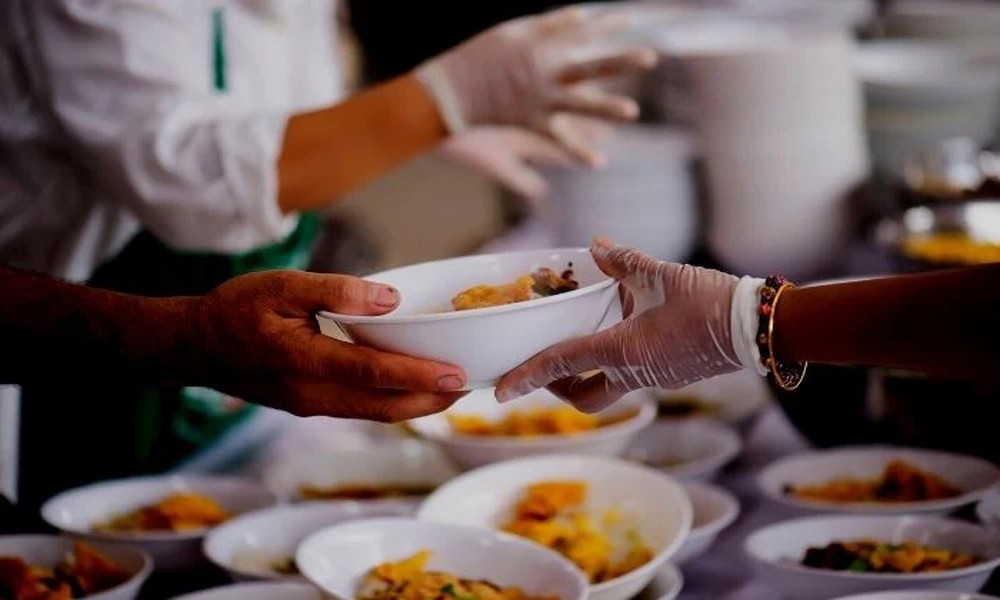
The Receipt That Hit Harder Than I Expected
My ₹400 airport sandwich changed my life. Not because of the sandwich. Because of what came after.
I tapped a banner ad for a meal donation NGO, gave ₹200, and forgot about it within an hour. Two weeks later, an email arrived. A photo of kids eating lunch at a school in Jharkhand. My contribution had funded four meals.
My sandwich had cost more than four hungry kids ate that day. I stared at that email for a long time.
That was the moment food donation online stopped being a vague idea and became real for me.
You probably know the feeling. You scroll past hunger statistics. You feel bad for ten seconds. Life moves on. Here is the thing. The gap between feeling sad about hunger and actually doing something about it is now about 90 seconds and a UPI PIN.
According to the FAO’s 2025 report, around 733 million people went hungry worldwide last year. India alone has roughly 194 million undernourished people, per the Global Hunger Index 2025. And the world wastes enough food globally to feed every hungry person on the planet four times over.
The problem is huge. The solution is smaller than you think.
The Hunger Problem in 2026
Hunger by the Numbers
Hunger is not a far-away problem. It is in the next lane of traffic.
A few facts worth knowing:
- The World Food Programme reported 309 million people faced acute food insecurity in 2025, the highest figure on record
- India ranks 105th out of 127 countries on the Global Hunger Index 2025, classified as serious
- Roughly 35% of Indian children under five are stunted due to chronic undernutrition, per NFHS-5 data
- The world wastes 1.05 billion tonnes of food annually, per the UN Environment Programme’s Food Waste Index
The math is brutal. There is enough food. It just does not reach the right plates.
Who Actually Needs This Help
Hunger has many faces. Some you see, some you do not.
Daily wage workers who lost work during the rains. School children whose parents skip meals so they can eat. Elderly people with no family nearby. Slum communities where one meal a day is normal. Disaster-hit families who lost everything in floods or earthquakes.
When you donate food online, you reach people you will never meet. That is the whole point.
Why Online Food Donation Has Exploded
Five years ago, donating meant cash, paperwork, and a long trip to a charity office. Today it takes one tap.
UPI changed everything in India. Most legitimate NGOs now accept payments through UPI, cards, net banking, and international gateways.
GivingTuesday’s 2025 India report showed online charitable giving grew 41% year-on-year, with food and child nutrition being the top two cause categories. People want to help. The friction just dropped to almost zero.
Why Donate Food Online Instead of in Person
The problem is solvable. The how is what most people get wrong.
Speed and Reach
A meal you fund in Bangalore can land in a Bihar village by tomorrow. No driving, no logistics, no spoilage.
Most NGOs run kitchens around the clock. Your money slots into supply chains that already work. You skip the messy parts. The food still arrives hot.
Verified Impact
Good NGOs send proof. Photos, receipts, beneficiary stories, annual reports.
I have donated to four food NGOs over three years. All four sent regular updates. Two sent personal thank-you emails from kids. One sent a calendar with photos of the schools they ran. That feedback loop did not exist with cash drops at offices.
Tax Benefits That Actually Help
In India, NGOs with 80G certification let you claim deductions on your taxes. If you donate ₹10,000 to a 100% deduction NGO, you save up to ₹3,000 at the highest tax slab.
In the US, contributions to 501(c)(3) charities are tax-deductible. Most online food donation platforms generate your receipt automatically. File it during tax season. Done.
Any Amount Counts
Forget the idea that you need a fat wallet to help. ₹50 funds one meal at most Indian food NGOs. ₹500 a month feeds a child for a full school term at some.
Small recurring donations beat large one-time gifts for NGO planning. They get steady cash flow. You feel involved year-round. Win-win.
Platform Comparison: Where to Donate Food Online
|
Platform |
Cost per meal |
Best for |
Tax benefit |
|---|---|---|---|
|
Akshaya Patra |
₹6 |
School children at scale |
100% under 80G |
|
Robin Hood Army |
Varies |
Urban surplus redistribution |
Volunteer-based |
|
Feeding India by Zomato |
₹50 |
Urban hunger, disaster relief |
50% under 80G |
|
ShareTheMeal (WFP) |
$0.80 |
International hunger |
Varies by country |
|
GiveIndia |
Varies |
Vetted multi-cause donations |
50% under 80G |
|
Goonj |
Varies |
Dignity-based rural giving |
50% under 80G |
|
Feeding America |
$1 = 10 meals |
US hunger relief |
501(c)(3) deductible |
How to Donate Food Online in Five Steps
Here is how to do it.
Step 1: Decide Who You Want to Feed
Generic giving feels good for ten minutes. Specific giving sticks.
Ask yourself one question. Whose hunger bothers you most? School kids who cannot focus in class? Elderly folks with no support? Daily wage workers between jobs? Animals in shelters?
Pick one. The clarity will guide every other decision.
Step 2: Pick a Trusted Food Donation Platform
Most people get stuck here. Too many options, no clear way to compare.
The table above gives you a starting point. For more on choosing the right charity, you can read our guide to vetting NGOs before you donate.
Step 3: Choose Your Donation Type
You have several ways to give:
One-time donation. You give once. The NGO routes it where the need is highest. Simple and clean.
Monthly recurring donations. Set up auto-debit for ₹200 or ₹500 a month. NGOs love these because they can plan kitchen budgets ahead.
Sponsor a child’s full year of meals. Many NGOs offer this for ₹6,000 to ₹15,000 a year. You get periodic updates on the child’s progress.
Corporate matching. Companies like TCS, Wipro, and Infosys offer employee donation matching programs. One quick email to HR can double your impact.
In-memory or in-honor giving. Donate in someone’s name. Birthdays, anniversaries, or in memory of someone you lost. Some NGOs send the honoree a card.
Step 4: Complete the Payment
Most platforms accept UPI, credit and debit cards, net banking, and international payments. UPI clears in seconds.
Watch for these signs of a secure checkout:
- HTTPS in the URL
- A clear donation amount before payment
- A confirmation page after payment
- An email receipt within minutes
If a site asks too much or feels off, walk away. Trust your gut.
Step 5: Track Your Impact
The good NGOs send updates. Photos from kitchens, beneficiary stories, quarterly impact reports.
No update within 30 days is a yellow flag. Email the NGO and ask. Real organizations respond fast and clearly. Sketchy ones go silent.
Save every receipt. You will need them at tax time.
Quick check: How much did you spend on food yesterday? Now picture ten people who spent zero.
Best Ways to Donate Food Online in 2026
The steps are the mechanics. These ideas are the inspiration.
- Sponsor a daily meal for one school child. Around ₹6,000 covers a full school year of lunches at most Indian NGOs.
- Fund a community kitchen day. Sponsor an entire day of meals for ₹5,000 to ₹15,000. Birthdays, anniversaries, memorials, all good occasions.
- Donate on milestones. Birthdays, anniversaries, weddings, work promotions. Read our birthday giving guide for more on this.
- Set up monthly recurring meals. ₹500 a month feeds five hungry people every single month. Forever, until you cancel.
- Run a workplace donation drive. Pool donations from colleagues. Most NGOs offer custom corporate giving pages with team leaderboards.
- Match friends and family. Pledge to match what your network gives during a campaign. Doubles your fundraiser overnight.
- Replace wedding return gifts with meals. A typical Indian wedding spends ₹50,000 to ₹2 lakh on return gifts most guests forget by Tuesday. Donate that budget instead. Some NGOs send a small card to each guest.
- Use surplus food redistribution apps. Apps like No Food Waste connect restaurants and caterers to local NGOs for surplus pickup. Zero waste, real impact.
“A meal you forget is a meal someone else cannot afford to.”
Real People Who Donated Food Online
Riya, Pune
Riya is a 26-year-old marketing executive who started a monthly online food donation of ₹500 in 2024. Two years in, she has funded over 240 meals through Akshaya Patra. Her words: “I forgot the auto-debit existed. I only remember when I get the impact report. It is the easiest good thing I have ever done.”
The Chen Family, Singapore
The Chen family runs an annual food donation online drive for Lunar New Year. Instead of red packets to extended family, they donate $50 per family member to ShareTheMeal. Last year they funded 312 meals for kids in Yemen. Their kids, ages 8 and 11, picked the country.
Sundaram and Co., Chennai
A small accounting firm started matching employee donations 1:1 in 2025. The team raised ₹1.4 lakh for a local soup kitchen in eight months. The owner said: “I expected three or four people to participate. Twenty-two did.”
These are ordinary people. One small choice. Real meals on real plates.
How to Spot a Trustworthy Food Donation Platform
Real stories build hope. The next step protects your hope.
Registration and Legal Status
In India, look for:
- 80G certification (your tax deduction)
- 12A registration (NGO tax exemption status)
- FCRA registration (required to accept foreign donations)
In the US, look for 501(c)(3) status. In the UK, registered charity status with the Charity Commission.
Transparency Indicators
Trustworthy NGOs publish:
- Audited annual reports
- A clear breakdown of program costs vs. admin costs
- Names and bios of board members
- Working contact details
A good rule of thumb: admin and fundraising should account for less than 25% of total expenses. Some run leaner. Some run higher because of cause type. Context matters.
Independent Ratings
Check ratings on:
- GuideStar India (now Candid India) for Indian NGOs
- Charity Navigator for US-based ones
- GiveIndia for vetted Indian organizations
- GlobalGiving for international causes
A high rating is not a guarantee, but a missing or hidden one is a warning.
Red Flags to Walk Away From
- Vague mission statements with no specific programs
- No public financial disclosures
- Pressure tactics like “donate now or this child dies tonight”
- No physical address or working contact
- Unsolicited DMs or WhatsApp forwards asking for money
For a deeper checklist, see our guide to verifying nonprofits.
Common Concerns, Honest Answers
“Will my money actually feed someone?”
Yes, if you pick a vetted NGO. Cost-per-meal ranges from ₹6 at Akshaya Patra to ₹40 to ₹50 at higher-overhead organizations. Some overhead is necessary. Staff, kitchens, transport, audits all cost money. The question is not whether overhead exists. The question is whether the NGO is honest about it.
“What if the NGO is fake?”
Fake NGOs do exist. Run the platform through GuideStar India or Charity Navigator before you give. Check for 80G or 501(c)(3) status. Look for audited reports. If anything feels off, move on.
“I can only afford a small amount.”
₹50 is one meal. ₹200 is four meals. ₹500 a month for a year is sixty meals. None of these change the world by themselves. All of them change someone’s day. The math of collective small giving is what funds most NGOs.
What Comes Next: The Future of Online Food Donation
The hunger relief sector has changed more in five years than in the previous fifty.
Apps like No Food Waste and Feeding India now match restaurant surplus to nearby NGOs in real time. A wedding hall with extra biryani can list it at 11 PM and have it picked up by midnight, sent to a shelter by 1 AM.
CSR funding routes increasingly run through digital giving infrastructure. Indian companies are required to spend 2% of net profits on CSR, and a growing share goes to verified online food donation programs.
Crowdfunding has become the default response to disasters. The 2024 Wayanad landslides saw over ₹40 crore raised in three weeks through online food donation campaigns. The 2025 Assam floods saw similar momentum.
The future looks like more transparency, not less. Some NGOs are piloting blockchain-based donation tracking, where every rupee gets traced from donor to meal. AI-driven reporting is making it easier for donors to see real outcomes within days, not months.
One Click, One Meal, One Life
You will eat three meals today. Maybe four if you snack like I do. Someone, somewhere, will eat none.
When you donate food online, you do not solve hunger forever. You solve one meal for one person on one day. That is enough. That is the whole point.
Pick a platform this week. Give ₹100 or $5 or whatever feels right. Set it as a monthly auto-debit if you can. Forget about it. Watch the impact reports show up in your inbox.
A meal you will not remember is a meal someone else will not forget.
Your phone is in your hand. The platforms are one search away. The hungry are not waiting.
FAQ
What does it mean to donate food online?
To donate food online means giving money through a digital platform to fund meals for people in need. The NGO uses your donation to buy, cook, and distribute food to schools, shelters, kitchens, or disaster zones. Most platforms accept UPI, cards, and net banking, and they send a tax receipt by email.
How much does one meal cost when I donate food online in India?
One meal costs between ₹6 and ₹50, depending on the NGO. Akshaya Patra serves school meals at around ₹6 per plate due to scale. Smaller NGOs may charge ₹25 to ₹50 because of higher operating costs. Even a ₹100 contribution feeds multiple people through most online food donation platforms.
Which is the best platform for food donation online?
The best platform depends on your priorities. Akshaya Patra is great for school meal programs at scale. Robin Hood Army works for urban surplus redistribution. GiveIndia suits donors who want vetted options across causes. ShareTheMeal handles international hunger. Always check 80G certification and audited reports before you give.
Are online food donations tax-deductible?
Yes, if the NGO has 80G certification in India or 501(c)(3) status in the US. Indian donors can claim 50% to 100% of the donation as a deduction. US donors can deduct up to 60% of taxable income. Save your receipt and consult a tax professional.
Can I donate food online without using a credit card?
Yes. Most Indian platforms accept UPI, net banking, and debit cards. International platforms accept cards, PayPal, Apple Pay, Google Pay, and bank transfers. UPI is the fastest in India and clears in seconds. You do not need a credit card to donate food online.
How do I know my online food donation reached someone in need?
Trustworthy NGOs send regular impact updates. Photos from kitchens, beneficiary stories, quarterly reports, and annual financials. Sign up for email updates when you donate. If you do not receive anything within 30 days, email the NGO directly. Real organizations respond clearly and fast. Silent ones are red flags.
Want to start your own online food donation journey today? Browse our list of verified food NGOs or read our guide to setting up monthly recurring giving. Small choices, real meals, every single day.
